
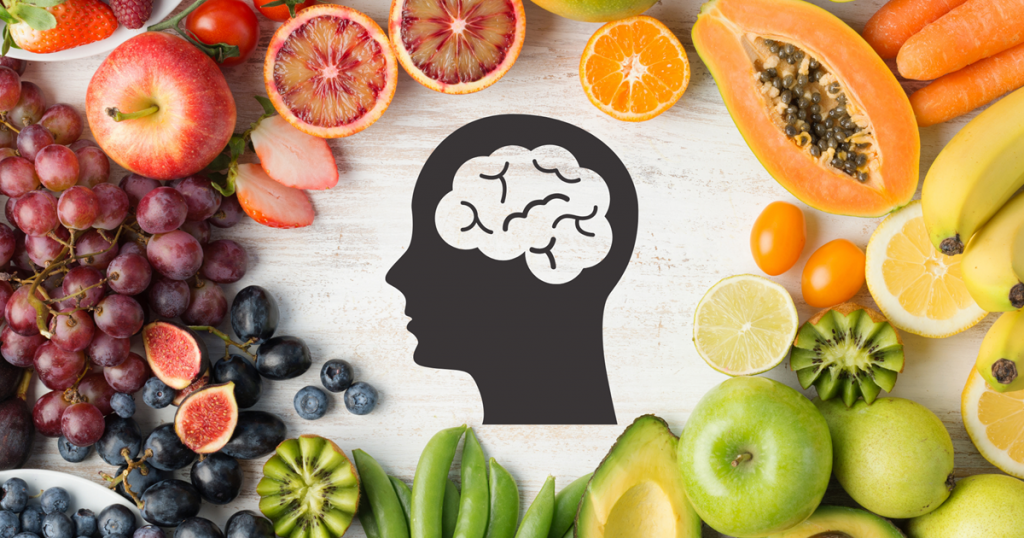
I’m sure we have all heard the phrase that food is medicine. Now this is something that we all know to be true when it comes to our physical health. There is no shortage of narratives and governmental information campaigns raising awareness to the importance of healthy nutrition in mitigating a score of preventable diseases and health concerns. This is also why I find it so surprising that more is not said about just how much of an impact a healthy diet can have on our mental well being.
Over the last several decades there have been a host of studies that have shown how diets that consist of highly processed foods are directly linked to an increase of many psychological disorders such as depression and anxiety. Western style diets like ones seen in places such as the US, UK, and here in Australia leave the populace much more susceptible to developing some sort of mental health issue in their lifetime when compared to countries that adhere to a more mediterranean style fare. That is to say, countries where whole foods are a more prominent part of daily consumption show much lesser rates of mental health disorder diagnoses. The difference in dietary regime has been directly linked to the precursors of mental health disorder developments in several studies.
One of the interesting things about mental health and wellbeing is that there are epigenetic factors that will influence an individual’s susceptibility to developing some sort of psychological disorder in their lifetime. This does not mean that disorders can be directly passed down through lineage but rather that our chances of development can be increased if there has been a familial history of such diagnoses. Like all epigenetics however, we need to have external triggers to activate these genes in our body and more and more research is showing that nutritional engagement is one very important trigger for many people.
Nutritional psychiatry is a relatively new field of study and practice but the research and data it is generating has been frankly astounding so far. Dietary interventions were implemented in a cross section of participants with a previous diagnosis of depression. Over a period of 3 months, these participants with moderate to severe symptoms who received nutritional guidance in their daily routine showed a marked improvement in overall well being when compared to the control group who maintained their standard diet. More incredibly, 32% of the people who showed improvement had a full remission of the symptoms associated with depression.
This study shouldn’t really come as a surprise as one of the biggest issues facing the medical systems in western countries today is the obesity epidemic. Mental health and cognitive disorders such as depression, anxiety, Alzheimers, and dementia are co-morbidities that can be directly linked to this epidemic. There is strong evidence to show that the vascular impact obesity has on an individual’s body may be leaving them far more vulnerable to developing disorders such as these. A 27 year longitudinal study demonstrated that people who were obese in their mid-life range were twice as likely as those in a healthier weight range to develop these disorders at their later stages.
There has also been mounting evidence in the recent few decades to show that certain types of neurodivergent diagnoses can also be treated or at least mitigated with simple changes to the diet. ADHD is being diagnosed more and more in our culture. Part of this is due to the awareness of the disorder itself with more children and adults seeing professionals seeking treatment. As the prevalence of the diagnoses has grown, which is a good thing, there has been little emphasis placed on taking a more holistic approach to its treatment. Recent studies have shown that changing the gut biome through altered diet and nutritional supplementation can lead to a positive impact on neurocognitive dysfunction in individuals with aspergers and autism.
Individuals with neurodivergent spectrum disorders will also exhibit some level of sleep dysfunction in their lives. The more sporadic and restless the sleep, the greater impact this will have neuro cognitive functioning in day to to day life. One controllable factor that directly impacts our ability to have a restful sleep is our diet. There was a study done in 2011 in South Australia where they examined 97 individuals with ADHD looking at their diet and sleeping patterns. The study showed that participants with higher consumption of fatty, sugary, and processed foods were much more likely to have a sleeping disorder compared to those on a whole food diet. This directly impacted their cognitive functioning capabilities as well as their levels of hyper activity throughout their day.
With all the mounting evidence showing the direct link between nutritional intake and psychological as well neurocognitive dysfunction it is no wonder that more and more health professionals are calling for nutritional intervention to become a standard part of treatment. Unfortunately for so many people, these aspects of your life will often go unaddressed when seeking support for many of the commonly diagnosed disorders. As much push as there is to have this become a standard part of treatment and intervention there is just as much lack of implementation on behalf of many in the medical industry. It would be so easy to put this all on the professionals and think that they would much rather prescribe a pill rather than work with their patients to help them uncover root causes of their presentation. But the reality is, more people would rather simply get that pill or diagnosis instead of examining their habits and making those changes that would benefit them.
Our relationship with food has become incredibly distorted in our society. People will prioritize convenience over substance which is self-evident in the popularity of fast foods and services such as uber eats. Less and less of the population are taking the time to cook for themselves so they will reach for those highly processed, fatty, sugary easy to obtain foods far more than they should. We will tell ourselves that we are too busy to do a grocery shop, too busy to cook, too busy to give our bodies the nutritional care they actually need to function properly.
I hear this story so often from my clients. There is always a reason why they can’t slow down to perform this simple act that we as humans have been doing since we harnessed fire. I believe that it is critical for us to shift our approach to food not just for the benefits to our bodies but also for the benefits to our mental health. Instead of seeing cooking as a chore, how can we learn to see it as an act of self care? An act of love?
Maybe it’s the chef in me but I truly believe that the simple act of cooking, sharing and consuming food truly is a demonstration of love. Love for the people you may be able to share it with but most importantly love for yourself. It’s a chance for us to slow things down, to consider what we need or want in that moment, and to be present for the preparation and consumption of that which was chosen. Cooking is often a meditative act for me. I put on some tunes, I prepare my ingredients, I allow myself to be drawn in by the smells, the sounds, the flavors and the anticipation of the moment. I was fortunate enough to grow up in a house where this was a regular part of our end of day routine. I have many fond memories of helping my mom around the kitchen while Earth Wind and Fire or Marvin Gay sang out from the record player, learning all the things I could from her along the way. This is something I try to recreate for me and my daughter in our dinner times and I like to think I’m doing a pretty good job of it.
Now I know it’s easy to think “Well I never had that so why would that be something I do?” But I’m sure you can think of a lot of things you never had, never did, that are a normal part of routine today. If you can recognise that your nutrition could stand little extra attention and care, I would highly encourage you to take the time to slow things down, write it in your schedule if you have to. Partake in this simple and accessible way to show yourself some love. Make those smarter choices with what you prepare and what you consume. Use it as an opportunity to nourish your body, your mind, and your soul. All of them will thank you.